Stress & Anxiety Counselling
Many people who reach out for counselling do not always describe what they are feeling as “anxiety.” More often, it shows up as a mind that won’t slow down, a body that feels tense, or a constant sense of pressure that is hard to explain.
You may be used to keeping things together, staying productive, and not wanting to burden anyone else. But over time, you might notice that it has become hard to truly relax. Your thoughts may keep circling around work, relationships, family, money, or the future, and you may find yourself wondering if you are doing enough or handling things well enough.
Stress can build quietly when you are carrying a lot, trying to meet expectations, or moving through life without much space to slow down. You may feel pulled in different directions — trying to stay capable, thoughtful, and steady for others, even when you feel overwhelmed inside.
If you have been holding a lot on your own for a long time, counselling can be a space where you do not have to keep pretending you are fine. We can slow things down together, make sense of what feels tangled, and gently understand what your stress and anxiety may be trying to tell you.


Stress & Anxiety Counselling
Anxiety does not always look obvious from the outside. You may still be going to school, showing up at work, caring for others, and getting things done — while feeling tense, distracted, or exhausted underneath.
Thoughts keep circling, even when you want to rest.
Your body feels tight, restless, or constantly on alert.
You may worry before a class, meeting, social event, health appointment, or difficult conversation.
Even when things are quiet, it can feel difficult to fully relax.
Counselling can help you recognize these patterns with more compassion, so anxiety feels less confusing and less alone.
Understanding Anxiety
Anxiety is not a sign that you are weak or broken. It is your body’s way of trying to protect you.
When anxiety stays turned on for too long, it can show up as worry, body tension, restlessness, irritability, or avoidance.
You may find yourself preparing for the worst, pulling back from situations, or feeling afraid before something even happens.
Your mind keeps circling around what could go wrong, even when you want to rest.
You may notice tightness, shallow breathing, stomach discomfort, chest heaviness, or feeling on edge.
You may feel tense, impatient, easily overwhelmed, or unable to fully settle.
You may put things off, avoid situations, seek reassurance, or pull back from what feels uncomfortable.

The Anxiety Cycle
Anxiety can create a loop. A trigger brings up fear, body tension, or emotional overwhelm. Avoiding the situation may bring short-term relief, but over time it can make anxiety feel stronger or harder to face.
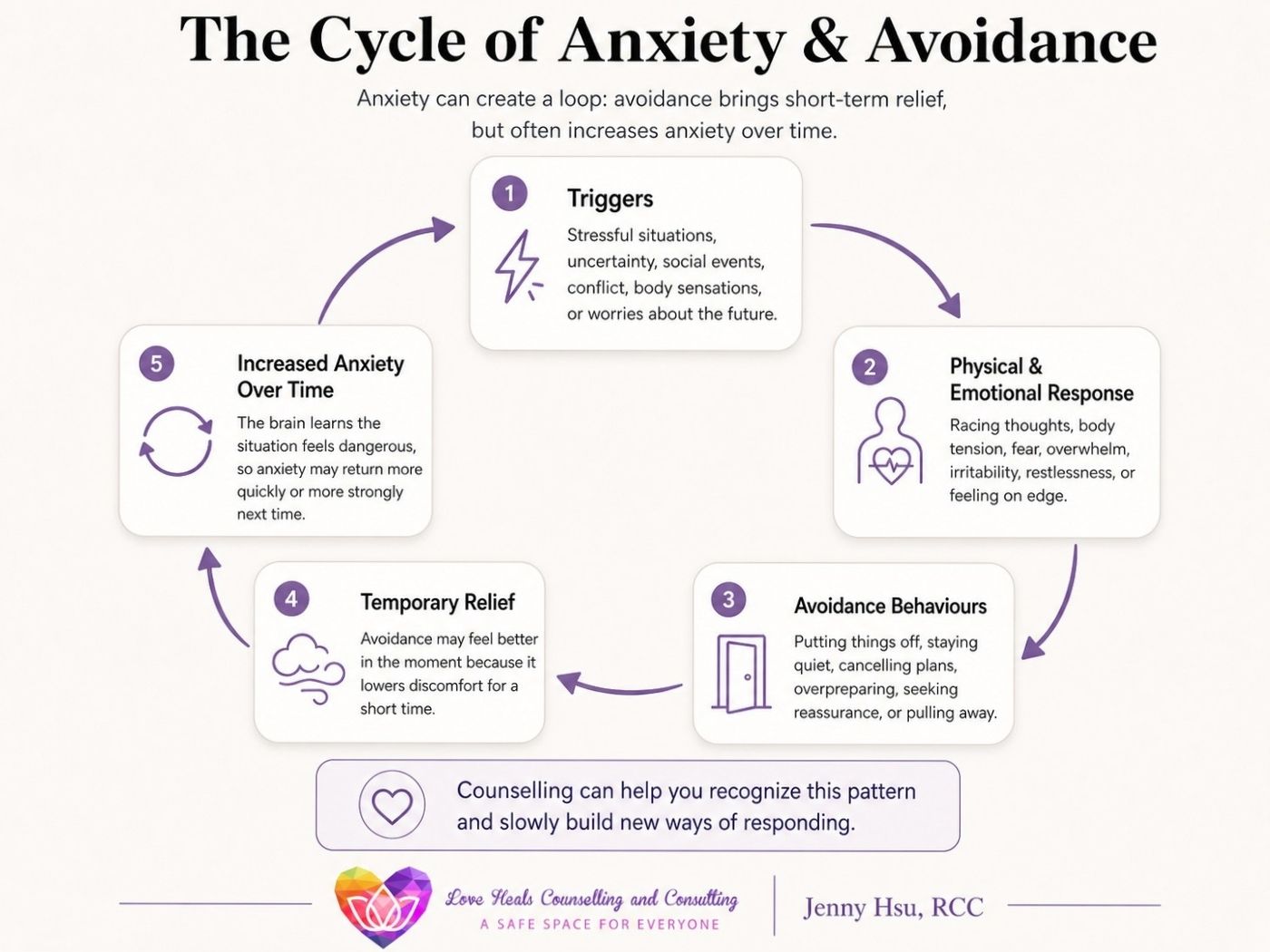
Counselling can help you notice the anxiety and avoidance cycle, understand the fears underneath it, and set gentle, realistic goals at your own pace.
In our work together, we can support anxiety in a biopsychosocial way — paying attention to your emotions, thoughts, body responses, relationships, life stress, and the environment around you.
Biopsychosocial Impact
Anxiety can affect your body, mind, emotions, relationships, and daily life.
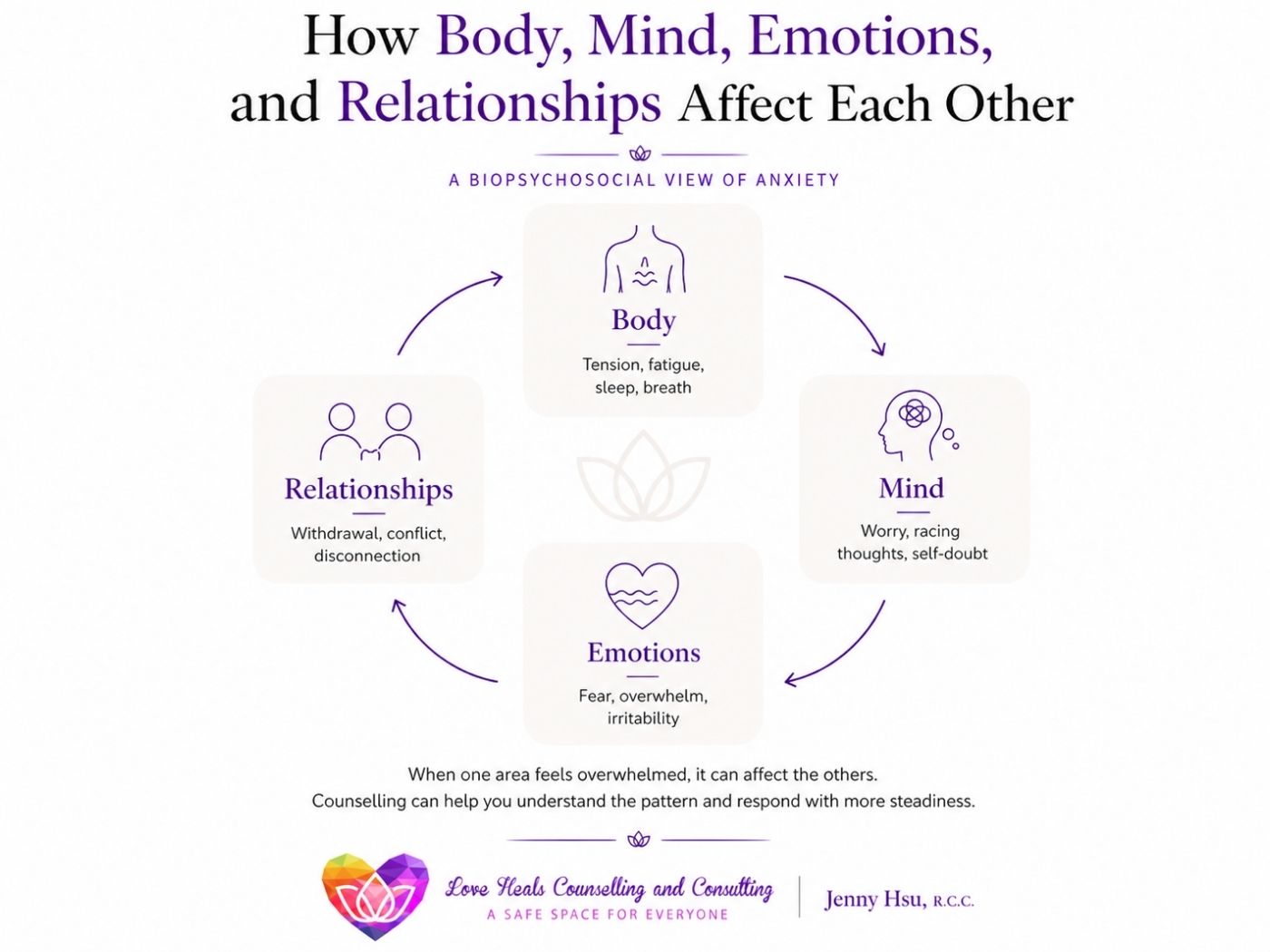
Counselling can help you understand these patterns and respond with more steadiness.
How I Can Help
In our work together, I can support you in understanding what is underneath your anxiety, moving at your own pace, and building tools that fit your life.

In our time together, we can work with anticipatory anxiety — the worry that shows up before something happens — so you can build confidence and begin breaking the anxiety loop.
I may draw from EFT, CBT, DBT skills, mindfulness, somatic-informed practices, and a biopsychosocial lens, but you do not need to know what all of these mean. Together, we will find what supports you in a practical, compassionate, and manageable way.

Start Here
If anxiety has been taking up too much space in your mind, body, relationships, or daily life, counselling can be a place to slow down and work through it with support.
In our time together, we can gently understand what anxiety is trying to protect, build tools that fit your life, and support you in feeling less controlled by anxiety — more like yourself, and more connected to the people you love.